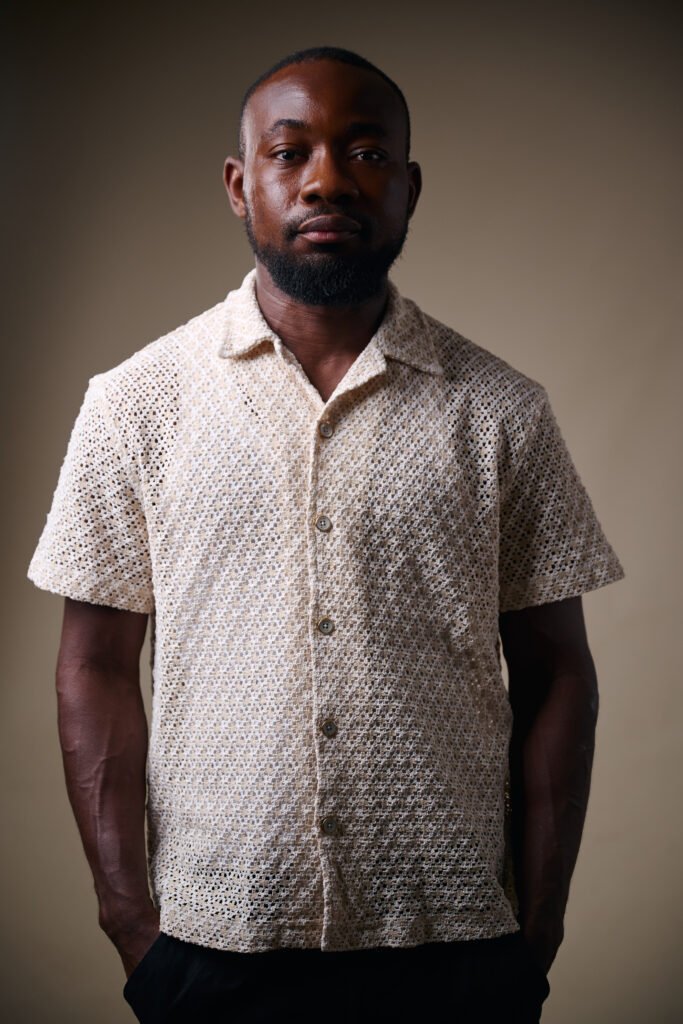
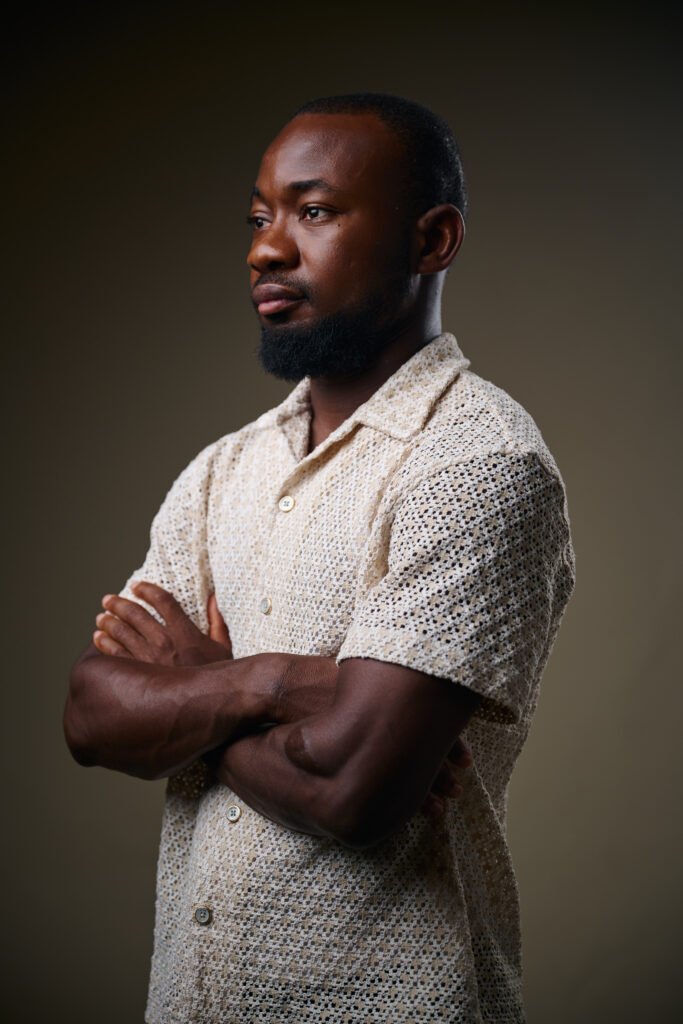
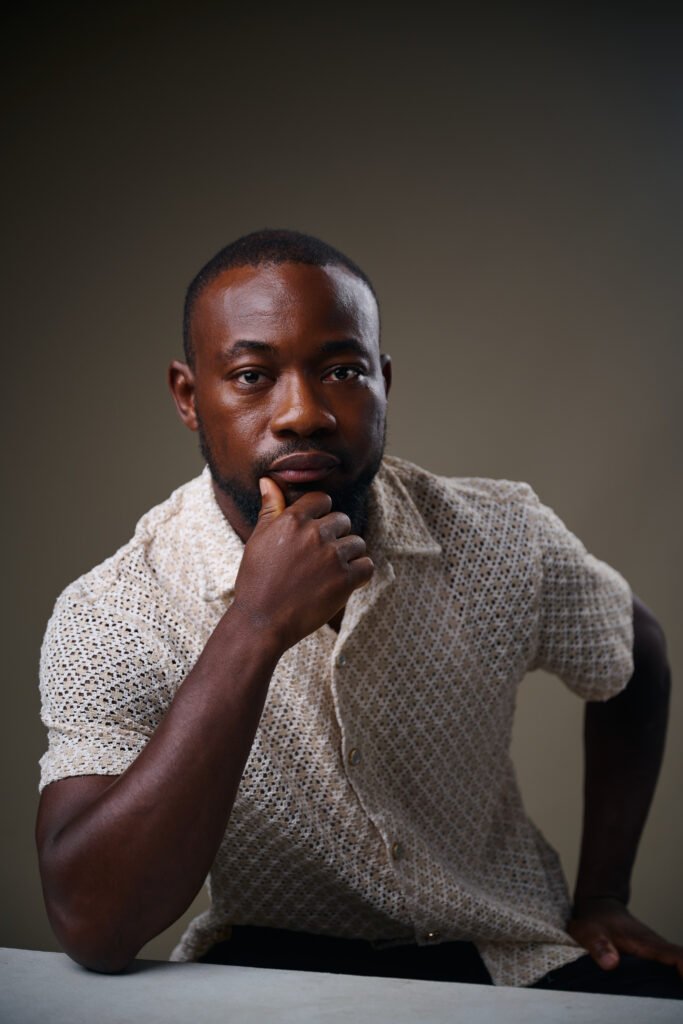
How a simple branding session became a conversation about identity, upbringing and the stories we carry.
…the answer to “How should I photograph this person?” isn’t always found in a mood-board, sometimes it is found in a conversation. Hakeem came into the studio needing photographs for his online presence, and he left with photographs that, I hope, feel a little closer to his story.
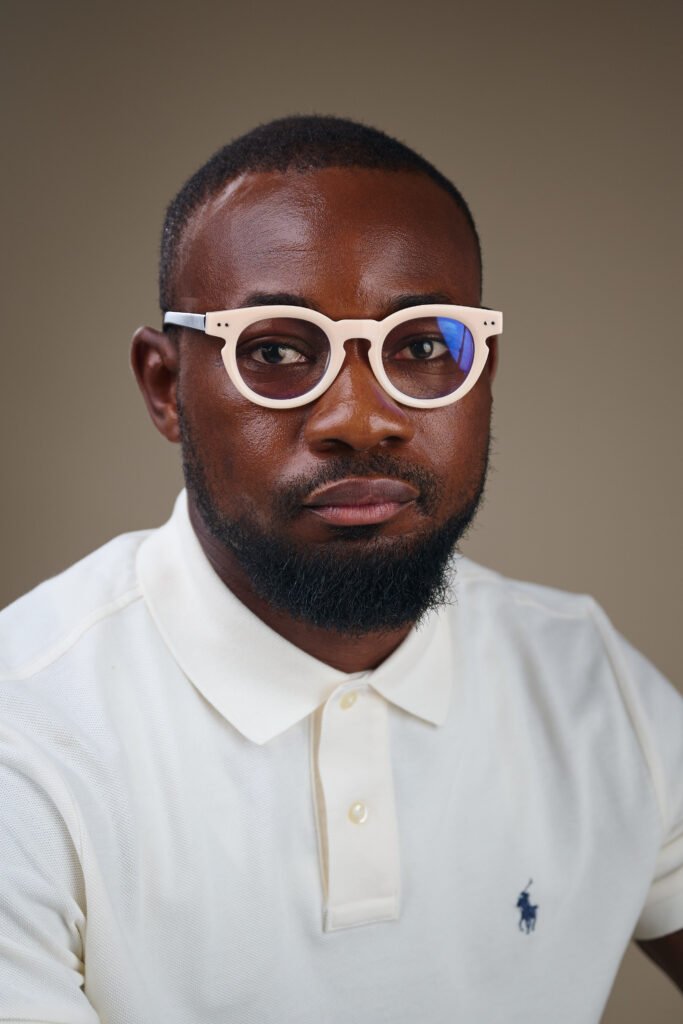
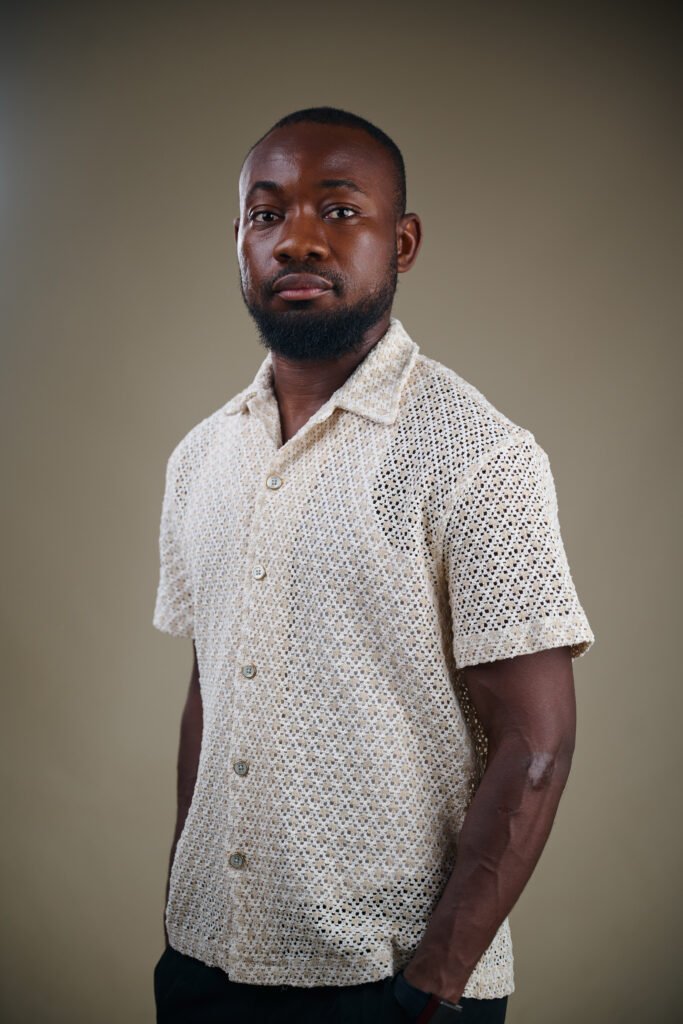
A few weeks ago, Hakeem Quadri came into the studio for a branding portrait session. Hakeem is the founder of Atupa, a startup, and the brief was fairly straightforward: he needed a collection of photographs for his social media, website and general online presence.
Nothing particularly complicated, he had been referred to me and we had agreed on what he needed, and we were ready to shoot. But sometimes, the most interesting photographs come from the moments when you realise that the brief isn’t quite the whole story; and this was one of those sessions.
It Started With a T-Shirt
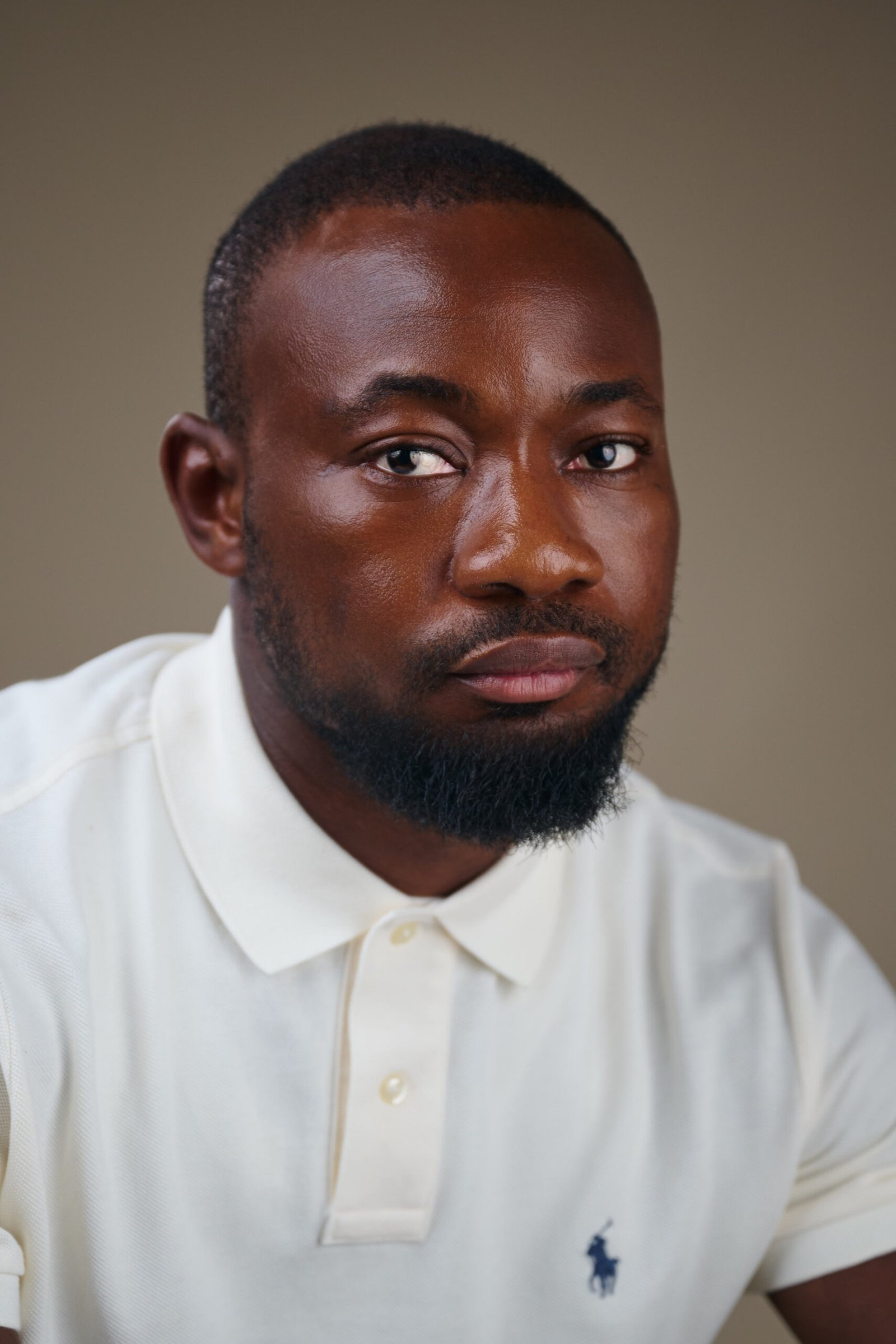
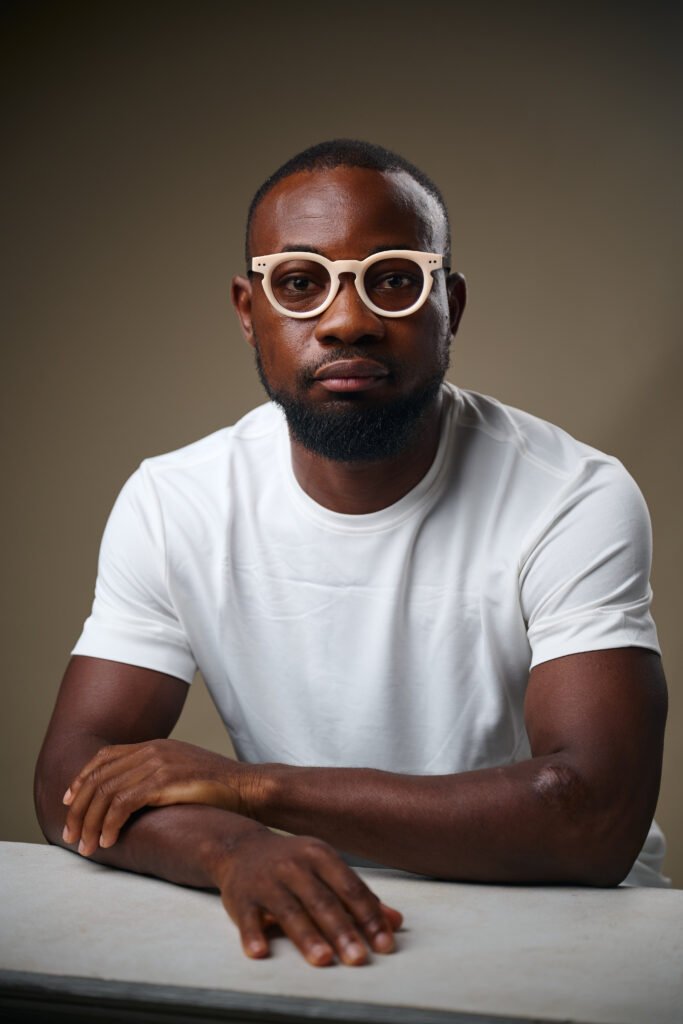
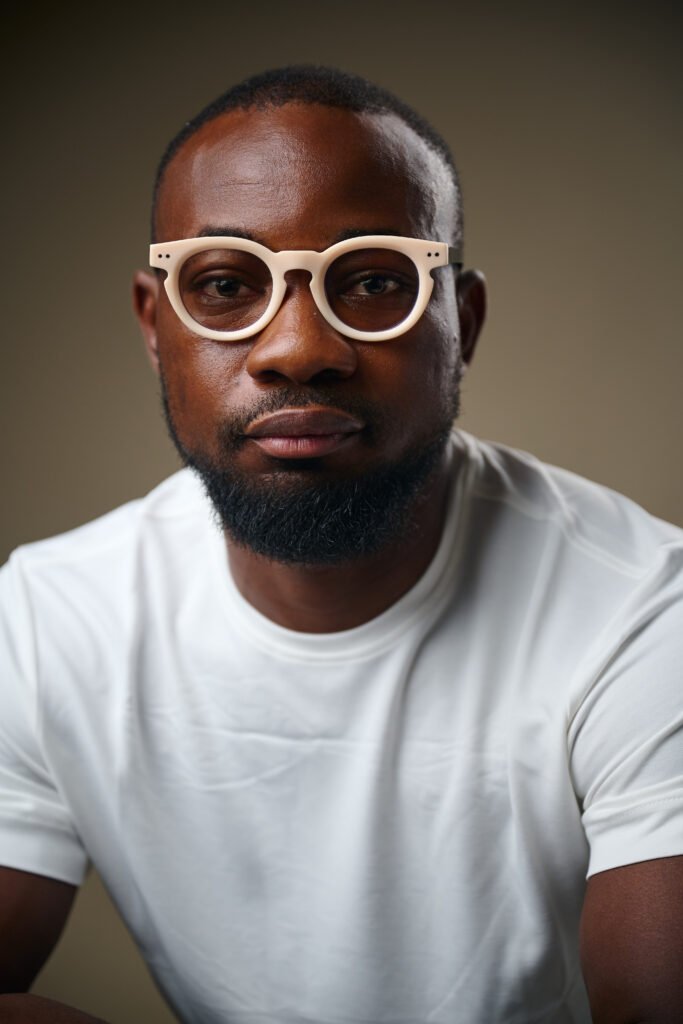
When we met, I asked what his outfit options were, and he had a simple T-shirt; and then another, and another version of something equally understated. There was nothing wrong with it. In fact, the simplicity made sense. But as a photographer, I’m always curious about the choices people make when they know they’re going to be photographed.
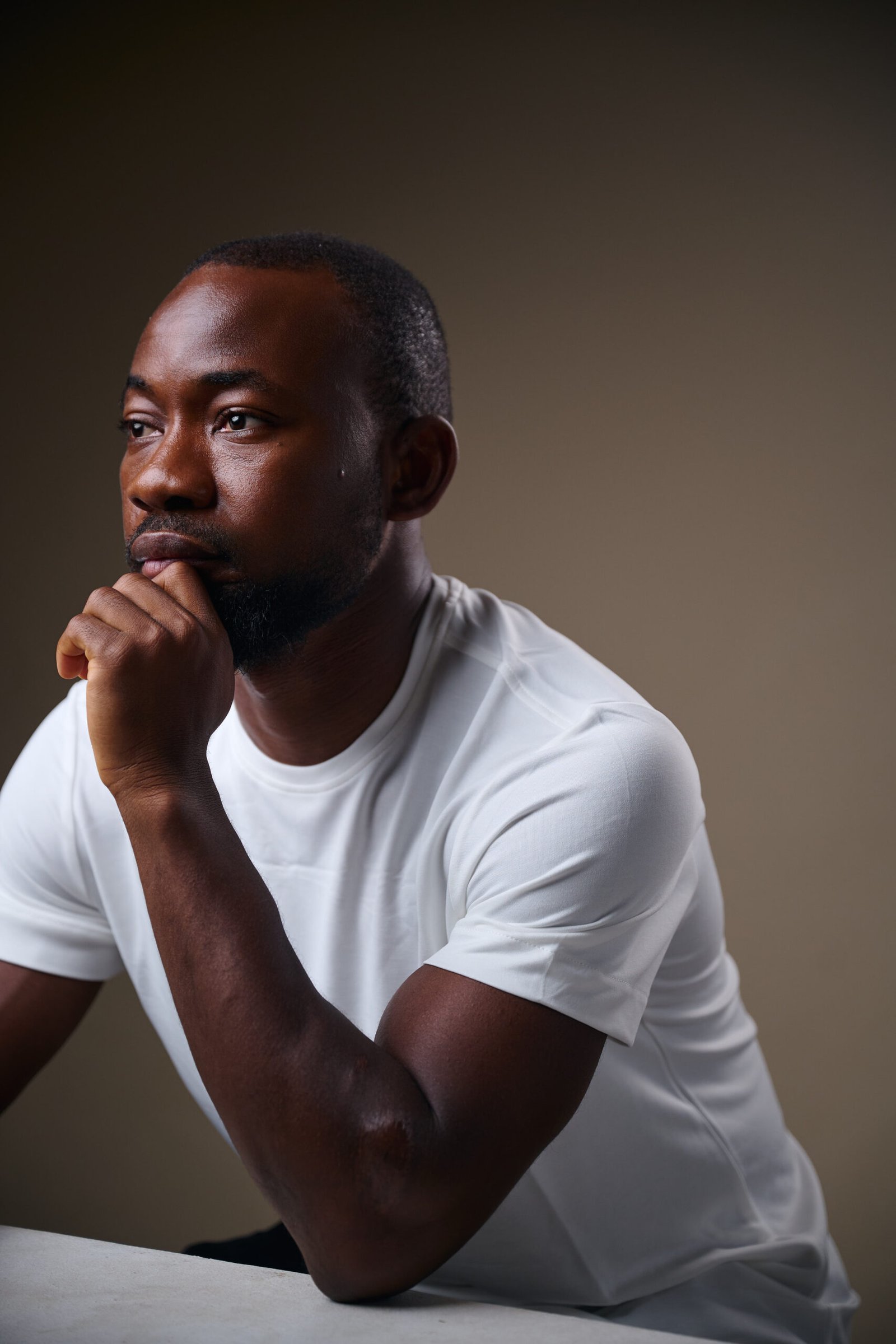
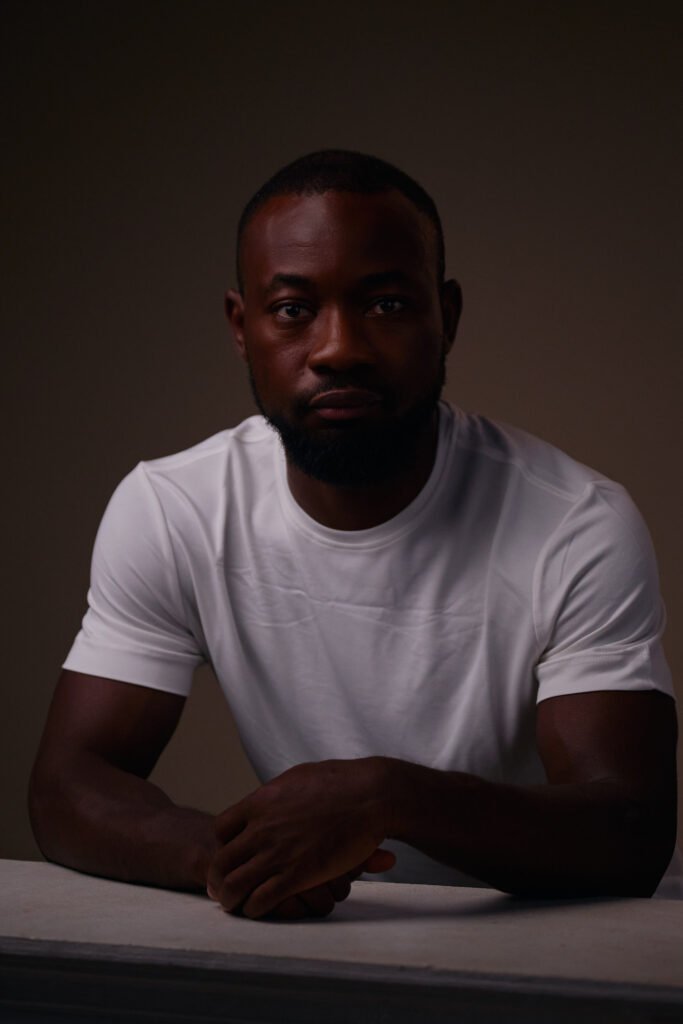
His choices told me something as he also didn’t seem particularly excited about the idea of being in front of the camera and I could have simply accepted that. We could have gone through the standard routine: pose, photograph, adjust, photograph, change outfit, repeat; but I decided to look a little closer and after photographing the first outfit, I went back to the images we’d made and something immediately stood out to me: The photographs with more contrast, deeper shadows and less light were the ones he seemed to respond to most.
That got my attention, because now there was a preference emerging and I wanted to understand where it came from.
Sometimes You Have to Stop Directing and Start Asking Questions
I asked him about it, and somewhere in that conversation, the shoot changed. I asked him what his story was and then he told me he grew up in Somolu. That detail immediately felt significant to me because my studio is also located in Somolu. The exact street where he grew up isn’t far from where I currently work – and that’s when it clicked. He had this demeanour of nostalgia and someone reminiscing about a familiar environment when I first met him before we started the session. We were, in a sense, photographing his story in the same environment that had helped shape it.
Quadri spoke about his upbringing and his childhood, and how much those experiences had influenced who he had become and what he was now building with Atupa. Suddenly, the T-shirts made a little more sense and the simplicity wasn’t necessarily a lack of effort; it was part of him and the preference for photographs with more shadow and contrast began to feel less like a technical preference and more like an extension of the way he wanted to be represented.
He Didn’t Want Me to Erase the Story
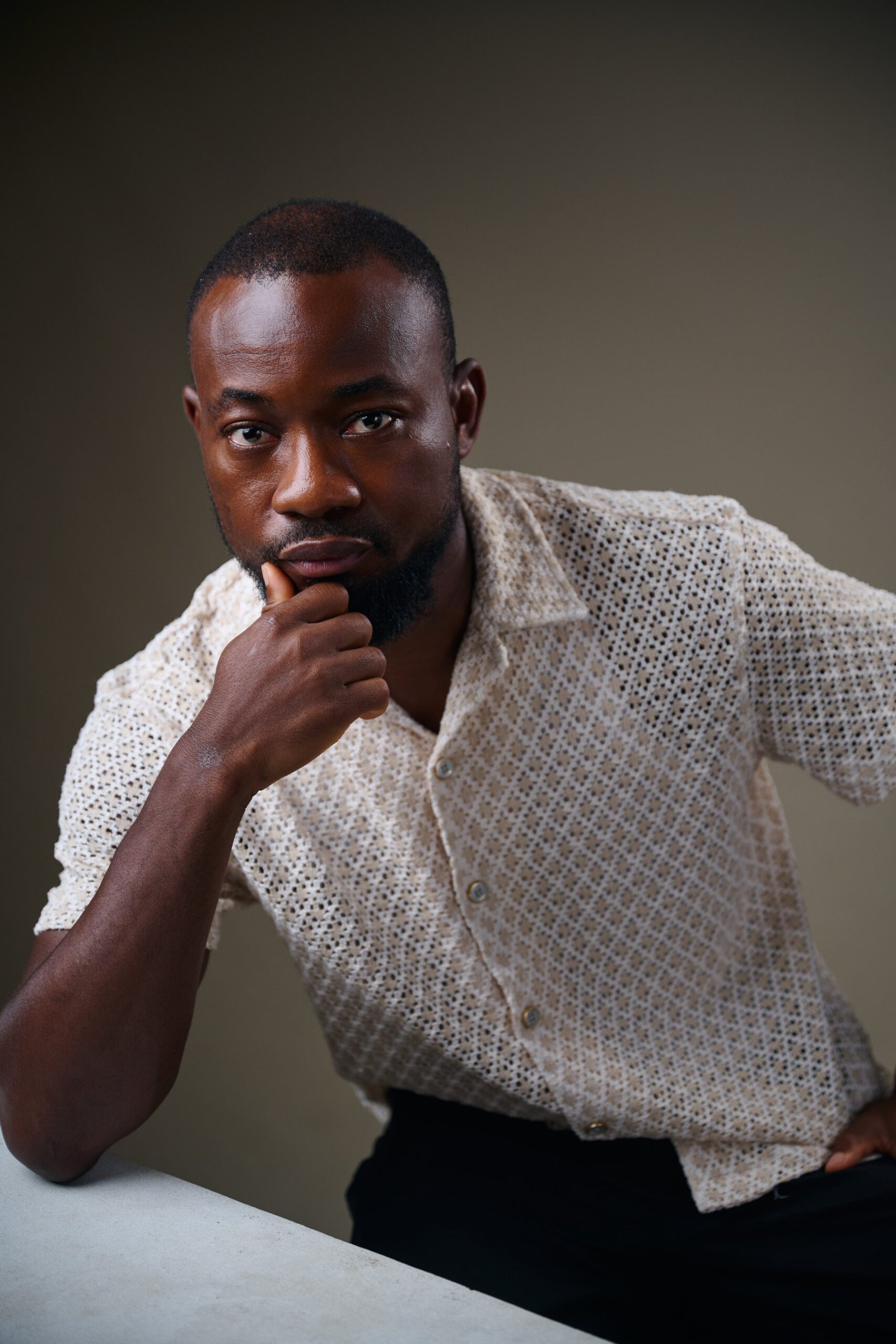
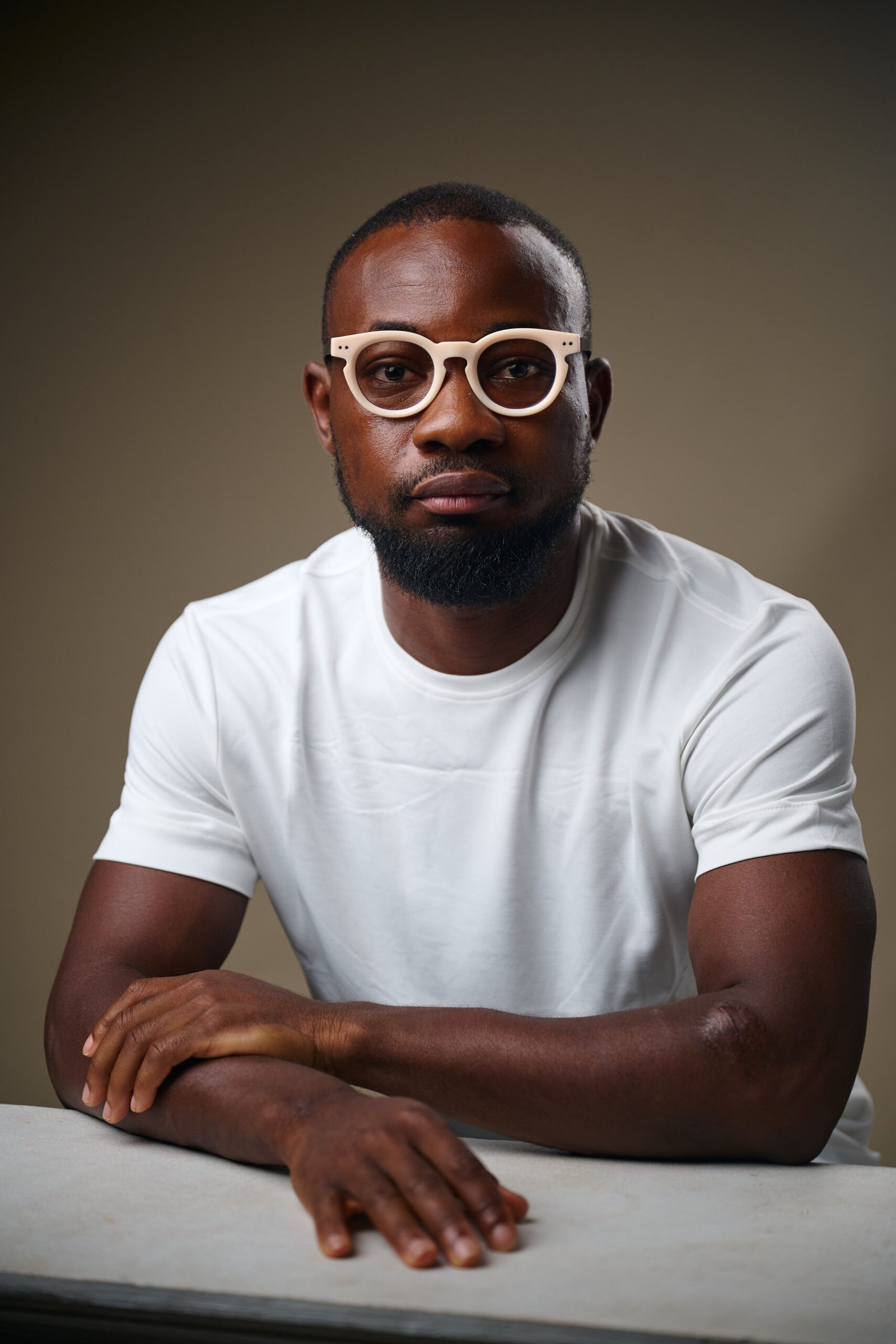
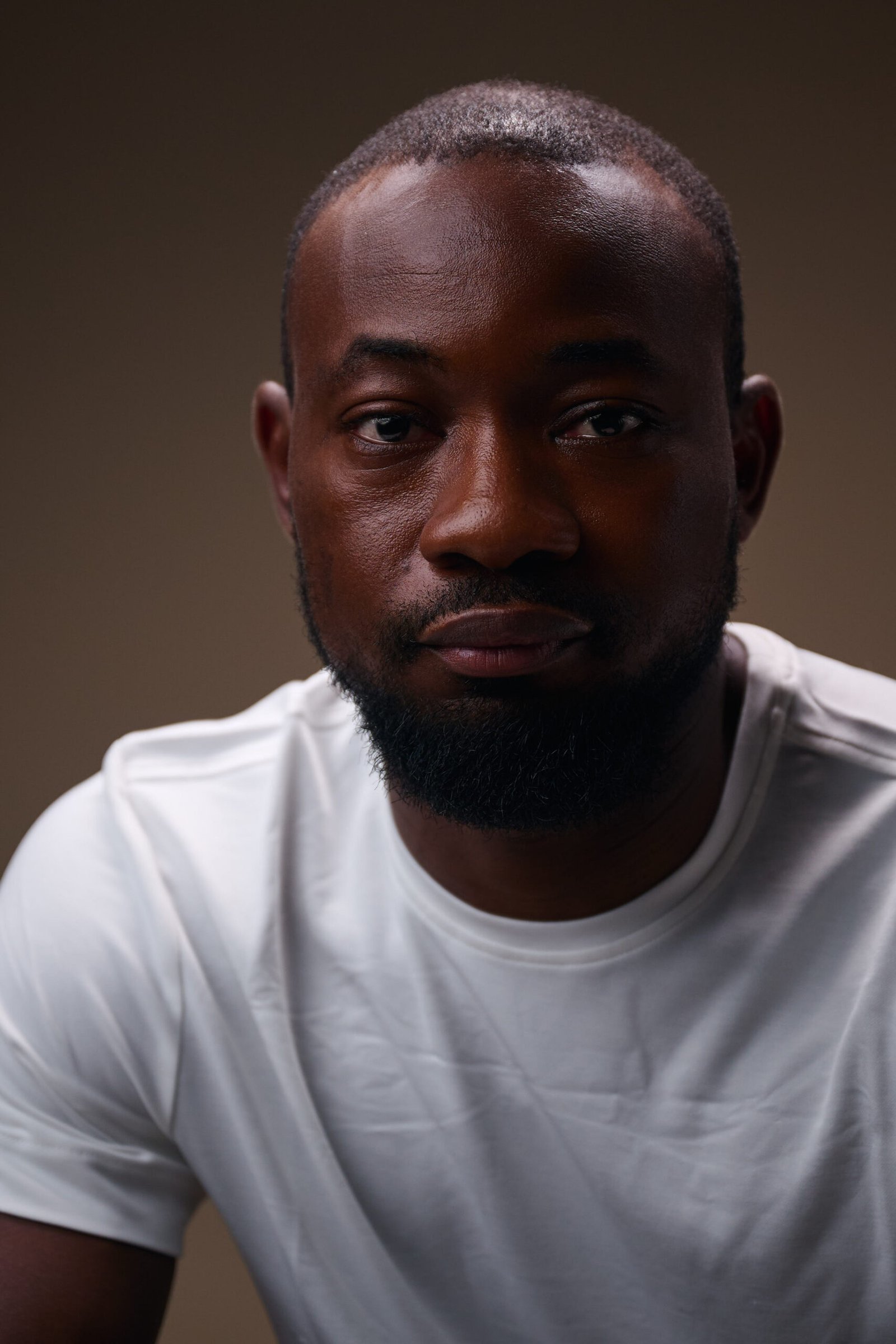
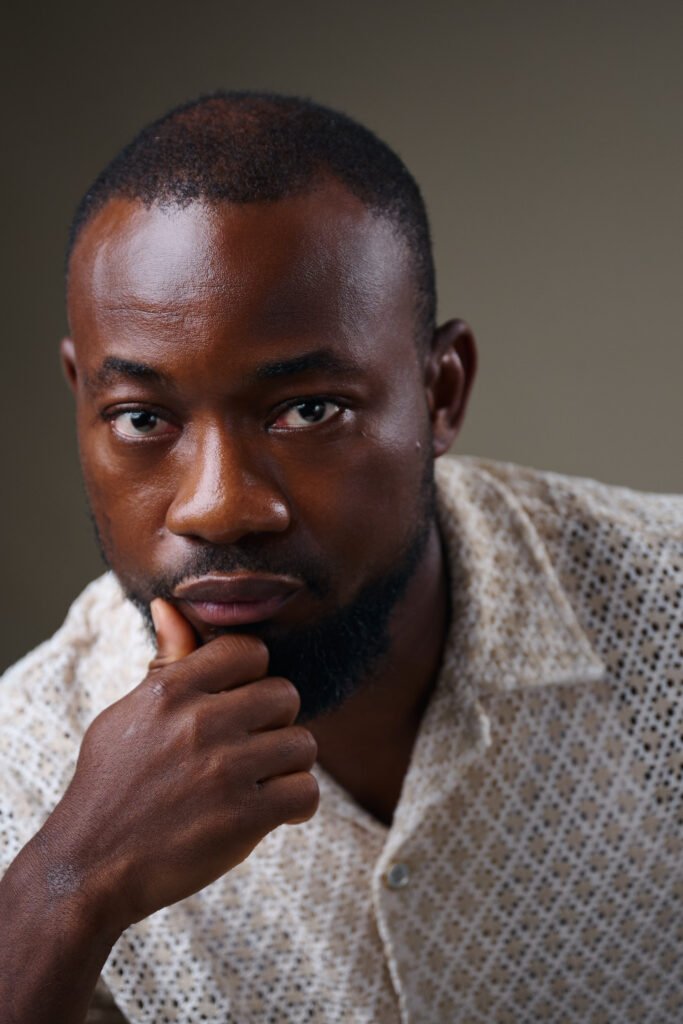
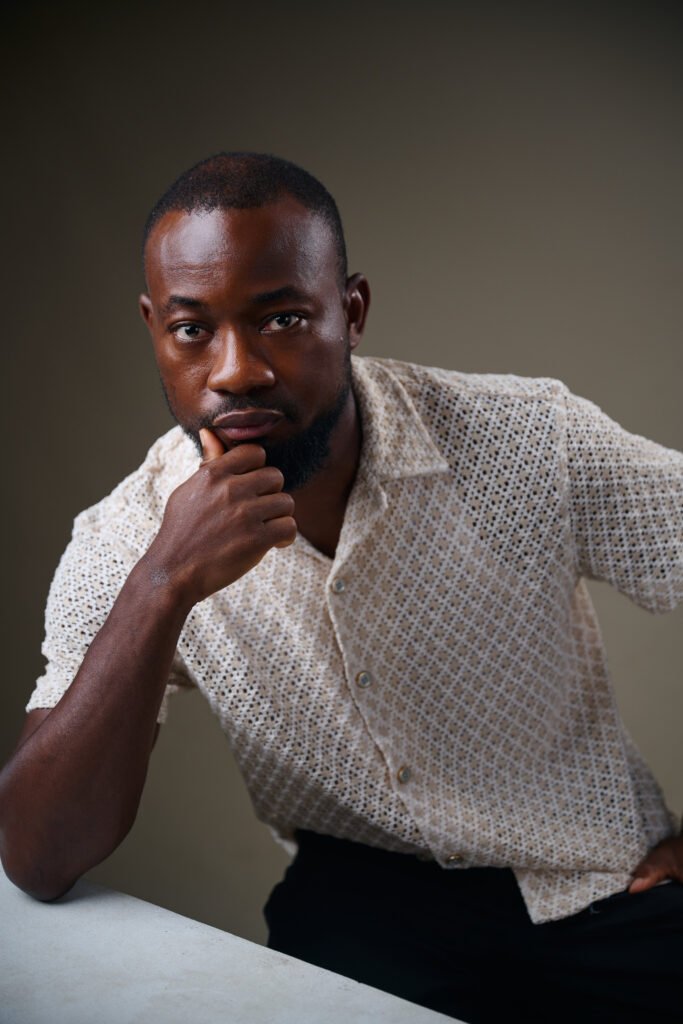
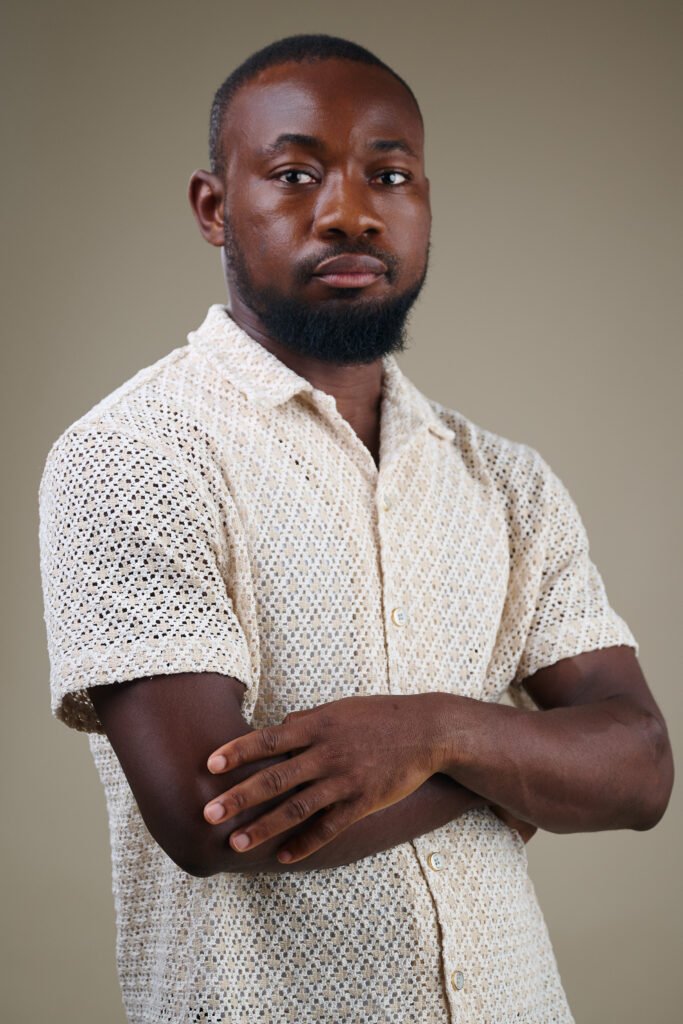
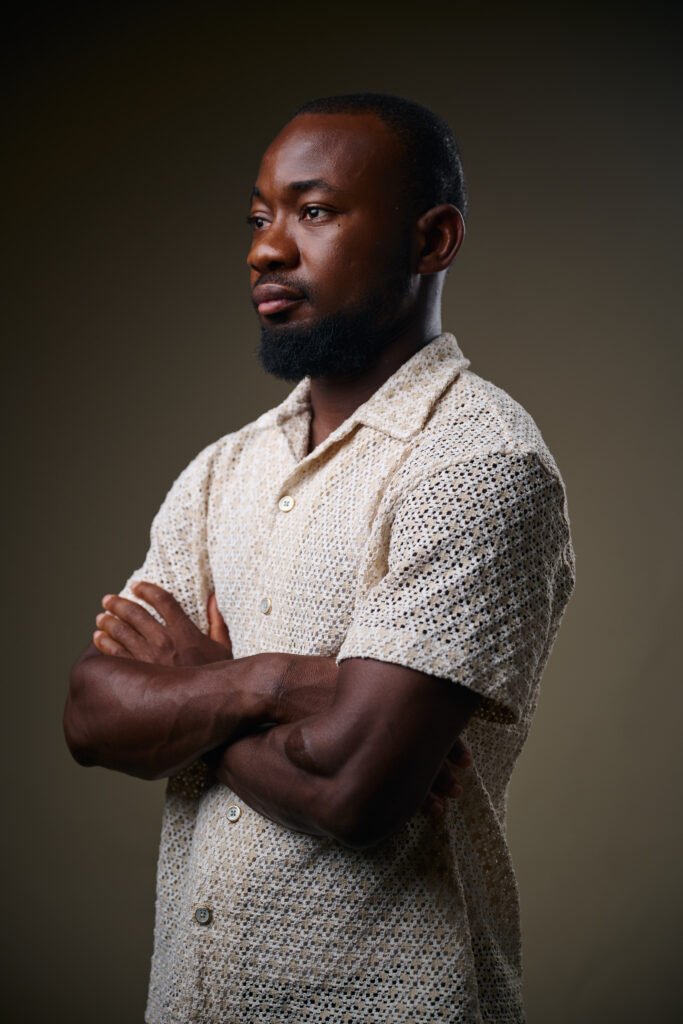
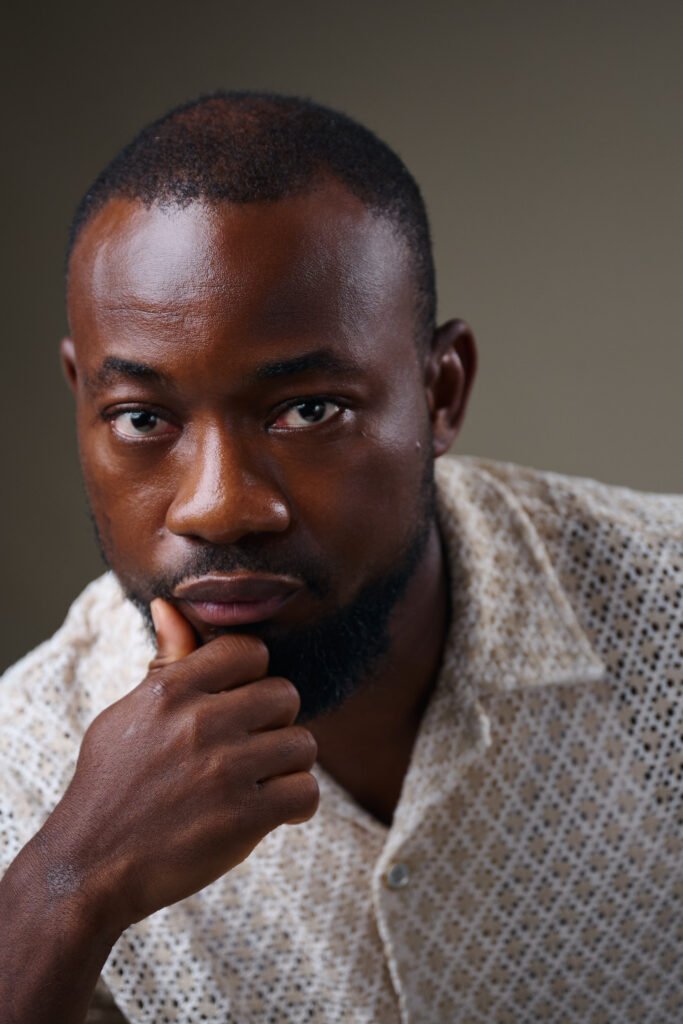
Then came another important part of the conversation. Hakeem told me he wanted his scars and body marks to remain in the final photographs and that he didn’t want the images to be overly retouched.
That was important, because there is often an expectation with professional portraits that the photographer should make everything perfect -smoothen the skin, remove the marks, erase the imperfections and make the person look like some idealised version of themselves. But Hakeem wasn’t asking for that, he wanted to be photographed as himself; and for me, that changed the way I approached the photographs. The goal wasn’t to hide the evidence of his life, it was to preserve it.
Finding the Light in the Shadows
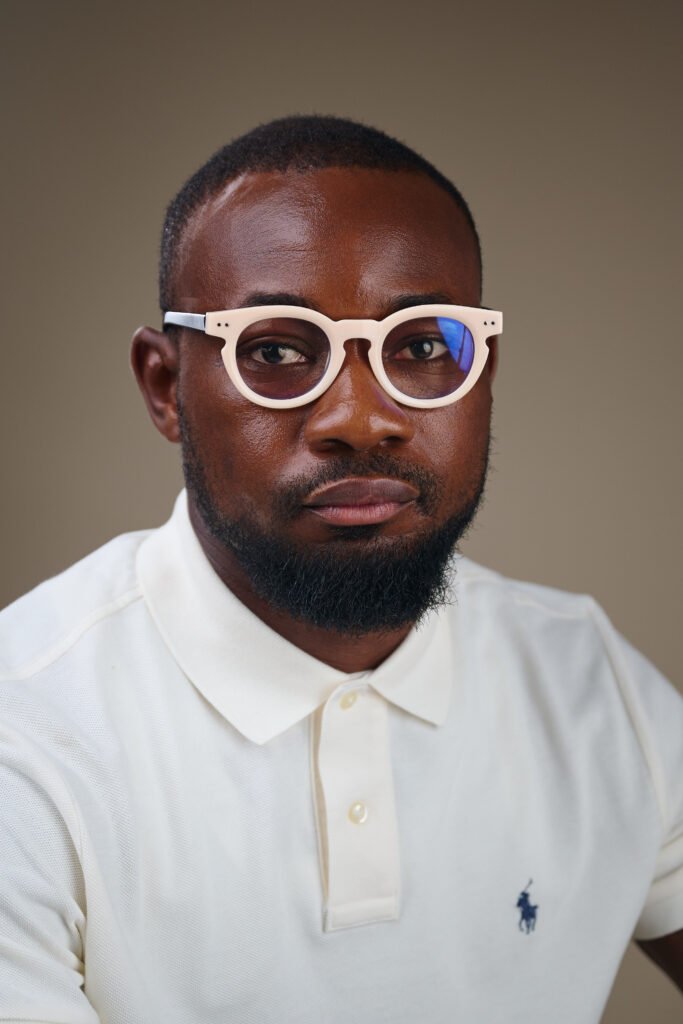
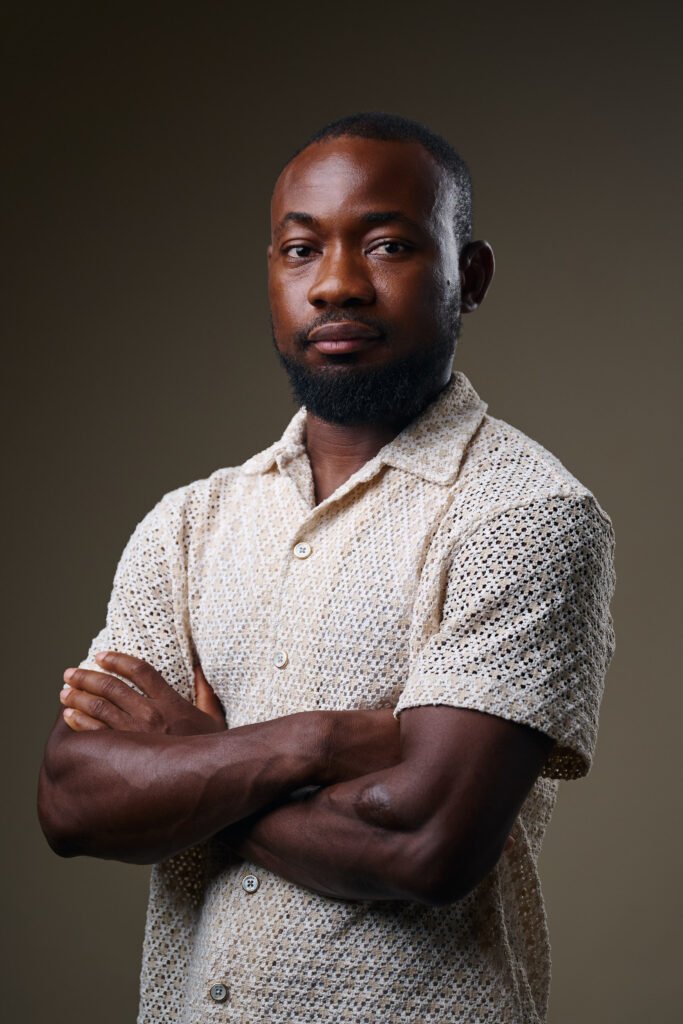
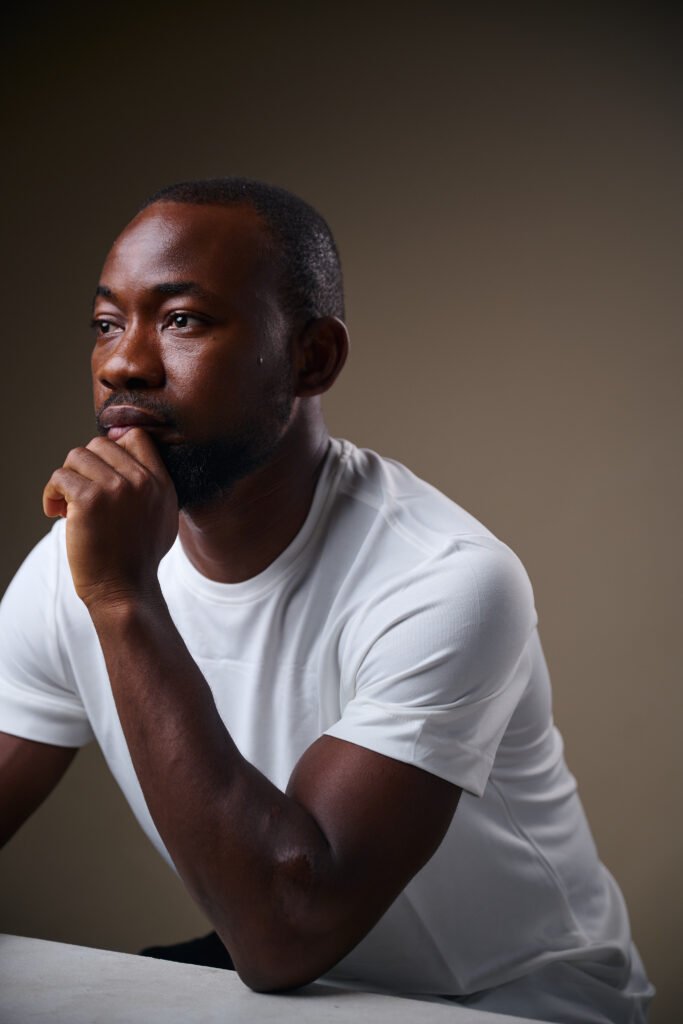
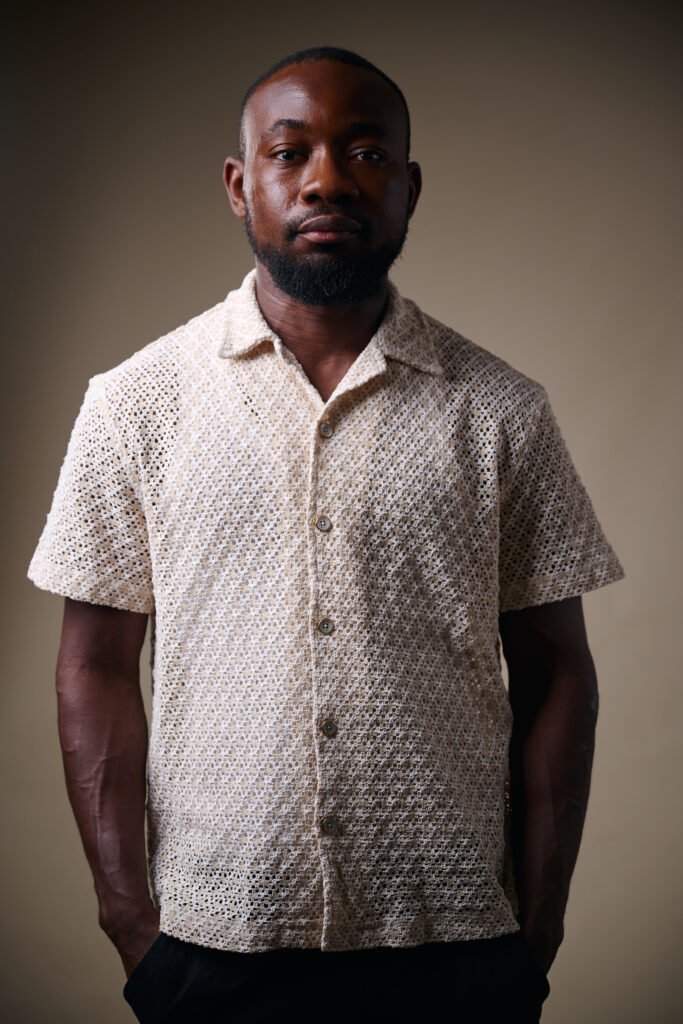
From a technical standpoint, I worked with a three-light setup throughout the session, but I didn’t use the three lights in exactly the same way for every photograph. Depending on what I wanted from a frame, I alternated between using one, two or all three lights and this gave me room to move between different levels of contrast and depth while keeping the overall visual language consistent.
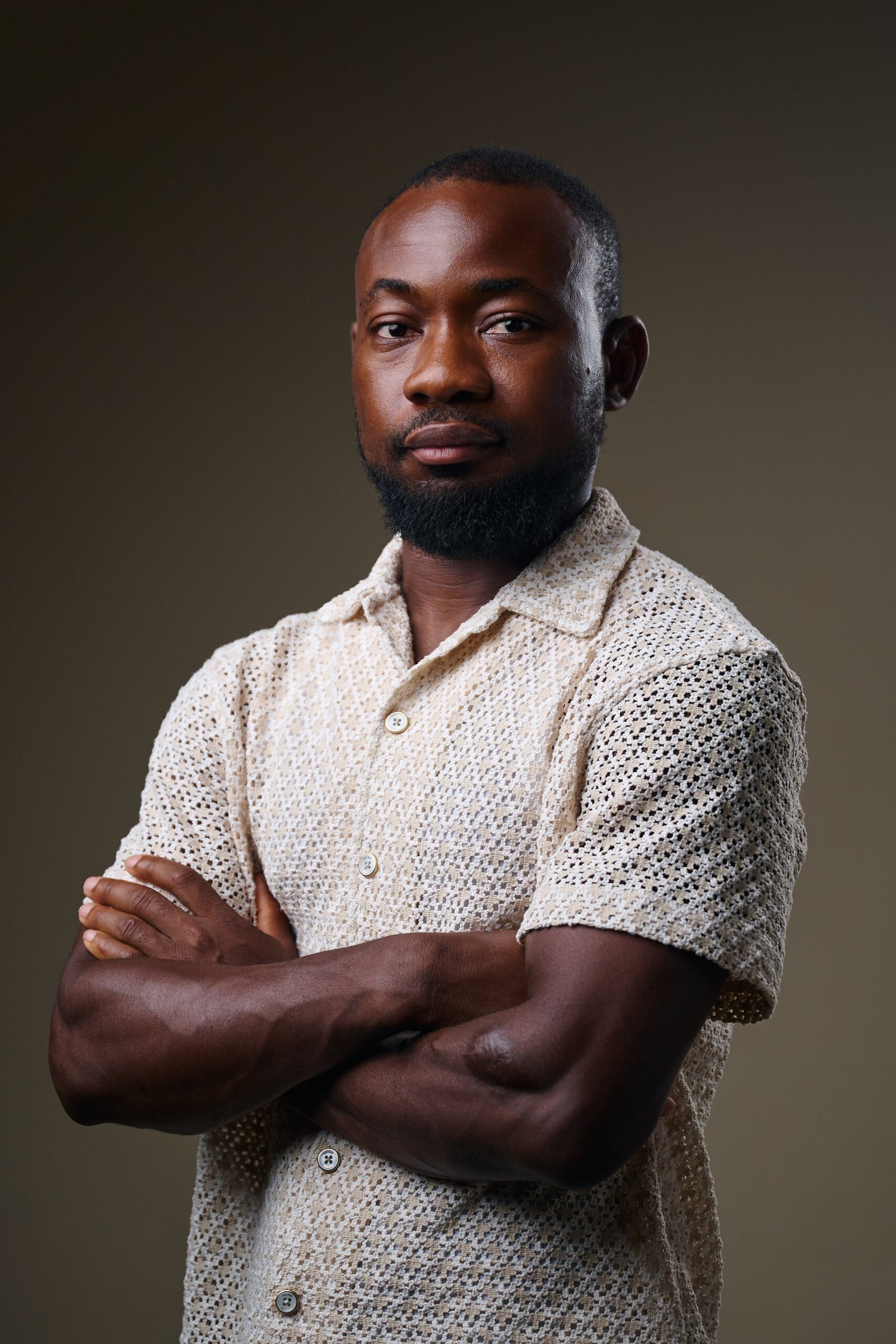
Some images needed more light, others needed less. Some benefited from stronger separation, while others needed the shadows to remain and this is where I think the technical and conceptual sides of photography meet; lighting isn’t only about making sure a subject is visible, it is also about deciding what you want the viewer to feel. The deeper shadows gave the portraits a certain weight, they allowed the photographs to retain some mystery while still feeling clean enough for their intended use as branding images.
The Challenge Wasn’t Making Him Look Good
It’s also very important to note for every project, what the needs and expectations of each client is. For Hakeem, the challenge wasn’t whether the final images looked good, it was making the photographs feel like him, and that’s an important distinction.
It would have been relatively easy to make a set of technically polished corporate portraits with clean backgrounds, even lighting, looking perfectly groomed in a straight posture with a big smile; but Quadri didn’t necessarily need photographs that could belong to anyone, he needed photographs that could belong to him and the more we talked, the more I understood that the session didn’t need to be overly complicated, it just needed to be intentional.
From Headshots to Something More
By the time we got deeper into the session, I wasn’t just thinking about getting enough photographs for his website or social media anymore, I was thinking about how the photographs could communicate something about the person behind the startup. The founder; the man who grew up in Somolu whose childhood experiences continue to influence what he’s building.
The person who isn’t interested in having every scar or mark erased from his face and body and prefers a little more shadow, a little more contrast, a little less polish and perhaps that is what makes personal branding photography interesting to me; Personal branding isn’t just about putting your face on the internet, It is about deciding what parts of yourself you want the world to encounter.
The Portraits We Ended Up With
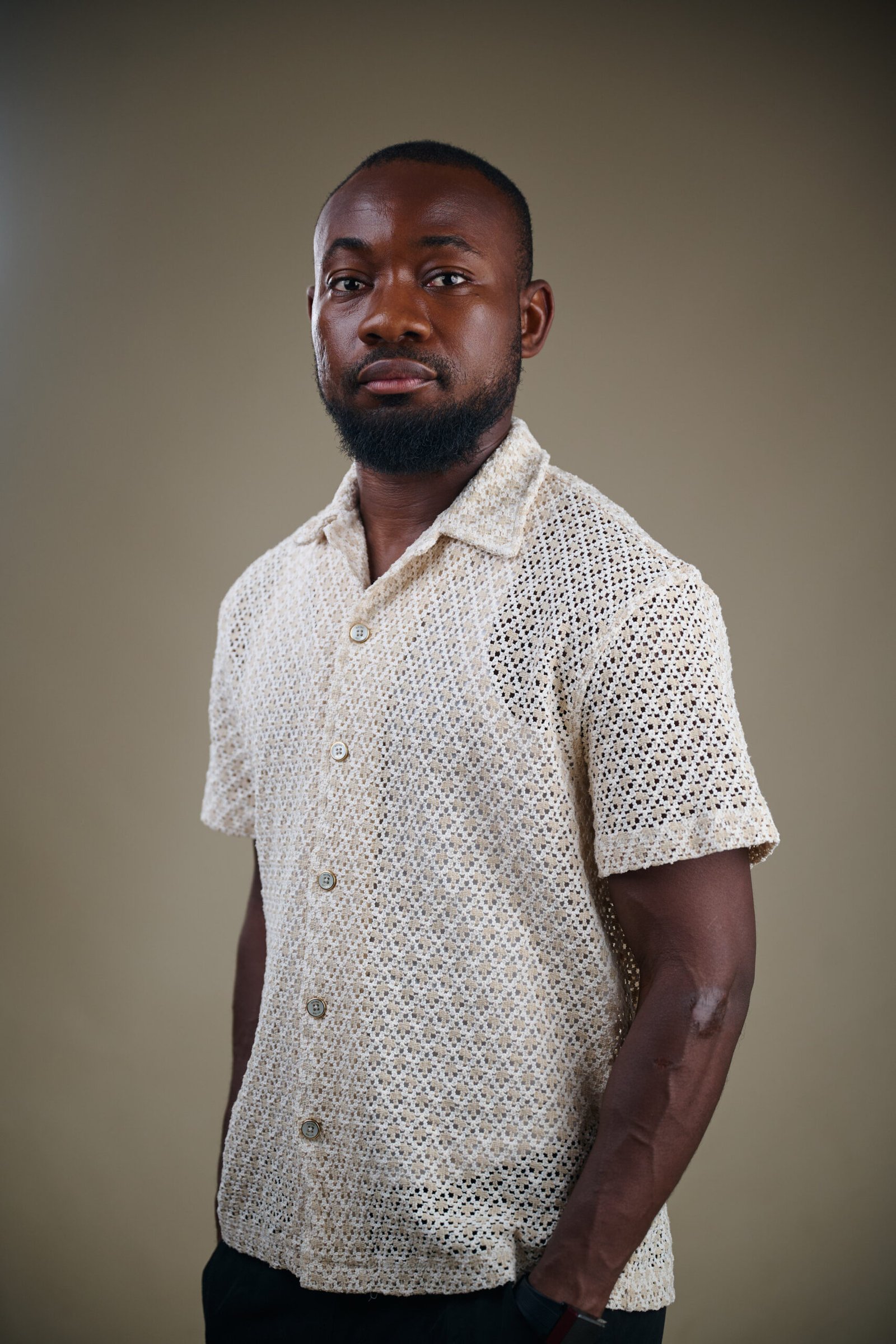
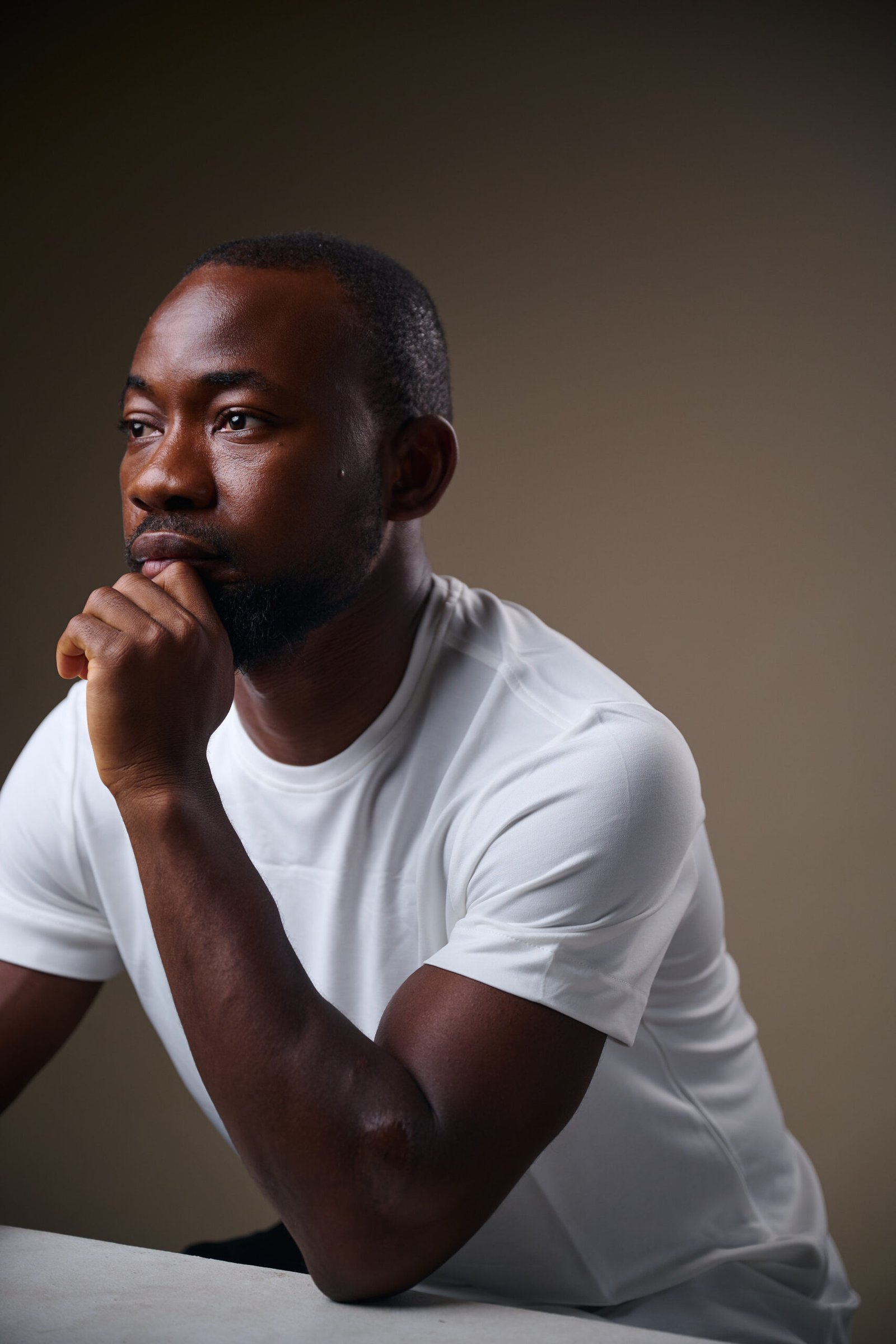
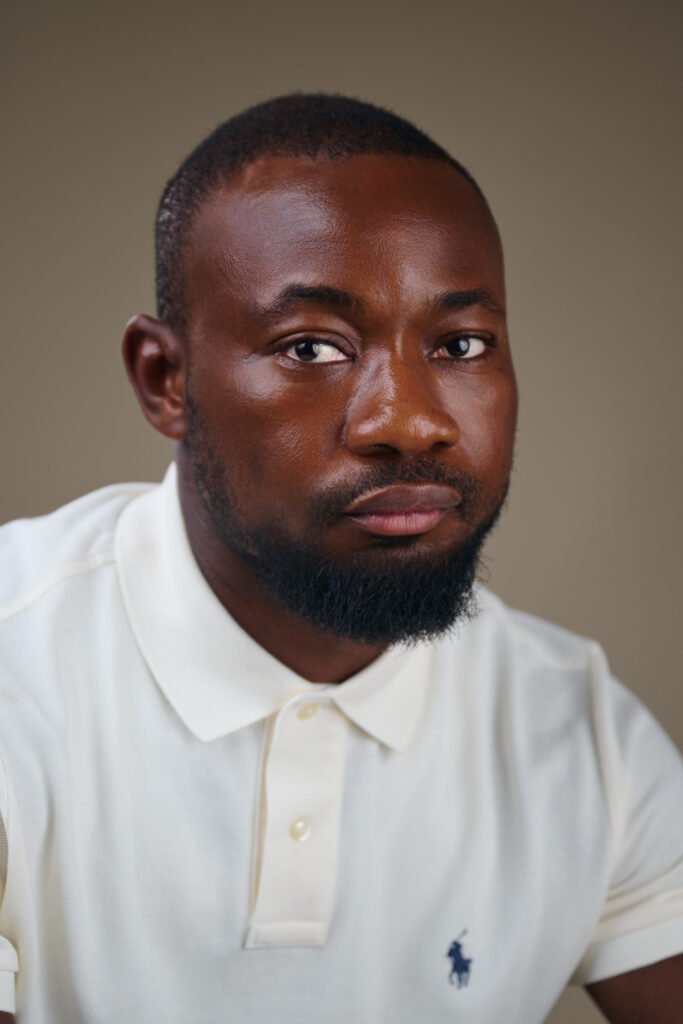
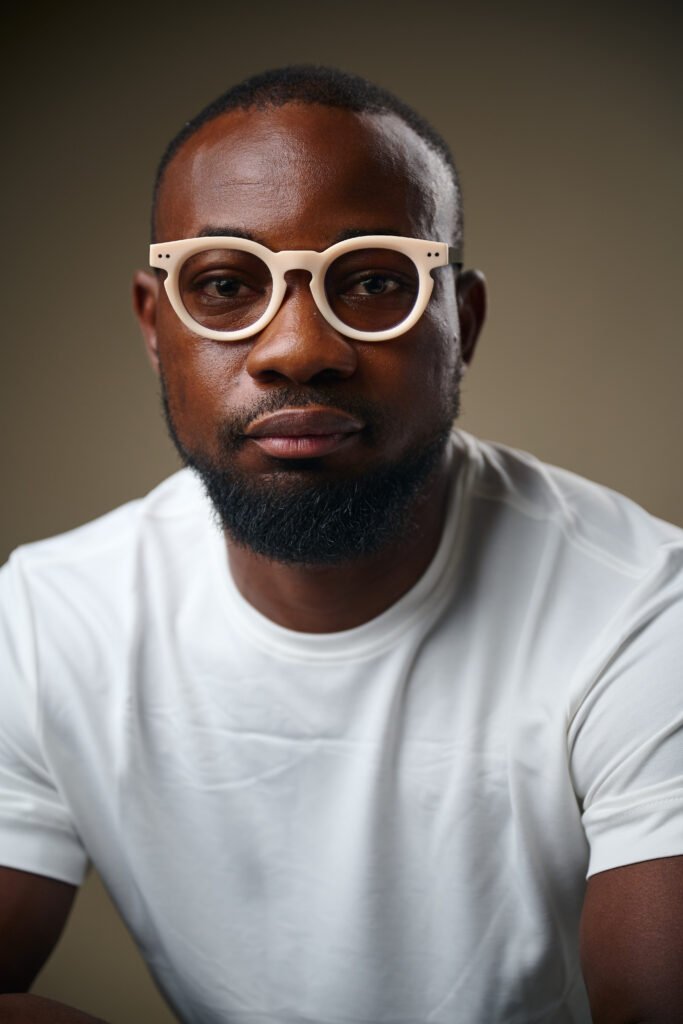
Looking at the final images now, I think there is a quiet consistency running through them. The colours are restrained, the backgrounds are simple with controlled lighting and varying expressions/poses; but even with these variations, the photographs don’t feel like four different versions of Quadri. They feel like different sides of the same person as one photograph is direct and unapologetic, while another feels more relaxed and contemplative.
None of these images require an elaborate set or an elaborate concept, the person, story and details is enough. The light simply helps us see them.
What This Shoot Reminded Me
I’ve always believed that portrait photography starts before the camera comes out, and this session reinforced that for me. Sometimes the most important thing you can do as a photographer is to pay attention. Pay attention to the clothes someone chooses, the photographs they respond to, how they move and what they say; but most importantly, ask questions.
Because the answer to “How should I photograph this person?” isn’t always found in a moodboard, sometimes it is found in a conversation. Hakeem came into the studio needing photographs for his online presence, and he left with photographs that, I hope, feel a little closer to his story.
And that, to me, is the difference between taking someone’s headshot and making their portrait.
Final Notes
Technically speaking, the intention wasn’t to create three completely different lighting styles. It was to create subtle variations in depth, contrast and mood while keeping the photographs visually connected.
The final retouching was also deliberately restrained. Hakeem had specifically requested that his scars and natural body marks remain visible, so the post-production focused on refinement rather than removing the things that made the portraits feel personal.
What started as a straightforward request for professional photographs became a conversation about identity, childhood, place and the things we choose to carry with us.
And perhaps that’s the part of portrait photography I enjoy most; you start with a person and a brief with a camera between you and if you pay enough attention, the brief eventually becomes a story.